


The result
Adrenaline-pumping slasher with enhanced movement
- First Person
- Arena
- Hack n' Slash
- Platformer
- SYNTHWAVE
Adrenaline-pumping slasher with enhanced movement
- First Person
- Arena
- Hack n' Slash
- Platformer
- SYNTHWAVE
Conditions
- Team of 6
- 4 Weeks
- No artists
- Some budget for assets
We were asked to make a platformer without a floor
- Team of 6
- 4 Weeks
- No artists
- Some budget for assets
We were asked to make a platformer without a floor
Trailer
Summary
Gameplay Design
Main focus of the design behind the game was movement - It had to be responsive and expressive.
Combat was designed to be fun, encourage and reward skillful movement.
Main focus of the design behind the game was movement - It had to be responsive and expressive.
Combat was designed to be fun, encourage and reward skillful movement.
Art Direction
Art style was designed to not obstruct gameplay and be thematically fitting.
A lot of time was spent on concept-art and neon outline shader.
Art style was designed to not obstruct gameplay and be thematically fitting.
A lot of time was spent on concept-art and neon outline shader.
Scrum
I held our daily meetings in Discord and curated our Hack n' Plan Scrum Board.
I held our daily meetings in Discord and curated our Hack n' Plan Scrum Board.
Sound Design
It was designed to be clear and amplify fun aspects of combat.
I used Audition to edit sound files and FMOD to add modulation.
It was designed to be clear and amplify fun aspects of combat.
I used Audition to edit sound files and FMOD to add modulation.
Contents of My Contribution
Smooth Intro
Idea
At the start of the project we decided to inflict agony upon ourselves by being somewhat creative and chose to make an FPS Hack n' Slash platformer rather than traditional 2D platformer.
Responsibilities
In the absence of artists, we had to choose a person to be responsible for Art direction, so I've decided to be the one in addition to Sound Design, part of Game Mechanics Design and SCRUM Master responsibilities I had.
Idea
At the start of the project we decided to inflict agony upon ourselves by being somewhat creative and chose to make an FPS Hack n' Slash platformer rather than traditional 2D platformer.
Responsibilities
In the absence of artists, we had to choose a person to be responsible for Art direction, so I've decided to be the one in addition to Sound Design, part of Game Mechanics Design and SCRUM Master responsibilities I had.
Gameplay Design
Conception
Brainstorm
As soon as the general idea of the game has been set by a vote in Miro, I've suggested that everyone should play a demo of the game similar to the one we want to make - Ghostrunner, so we'll have something common in mind for the discussion.
After a 30 minute play session, the team have discussed pros and cons of Ghostrunner's gameplay, mostly pros though.
Core Experience
After brainstorming initial ideas, our Game Design Document has been born.
Design Pillars were the first things to appear there:
1. Responsiveness
Each input, each player's action is recognized by the game and given clear, predictable feedback.
2. Fast Pace
The player is always on the move and engaged.
3. Simplicity
There are not a lot of mechanics, but the present ones are polished and do not obstruct the player from the action.
Then we've summed up the core experience in one sentence - "Fast-paced arena slasher with high mobility and combo system".
Player Mechanics
Initially, designers have laid out basic movement so programmers can start working on something.
But the final core player mechanics design list looks like this:
Conception
Brainstorm
As soon as the general idea of the game has been set by a vote in Miro, I've suggested that everyone should play a demo of the game similar to the one we want to make - Ghostrunner, so we'll have something common in mind for the discussion.
After a 30 minute play session, the team have discussed pros and cons of Ghostrunner's gameplay, mostly pros though.
Core Experience
After brainstorming initial ideas, our Game Design Document has been born.
Design Pillars were the first things to appear there:
1. Responsiveness
Each input, each player's action is recognized by the game and given clear, predictable feedback.
2. Fast Pace
The player is always on the move and engaged.
3. Simplicity
There are not a lot of mechanics, but the present ones are polished and do not obstruct the player from the action.
Then we've summed up the core experience in one sentence - "Fast-paced arena slasher with high mobility and combo system".
Player Mechanics
Initially, designers have laid out basic movement so programmers can start working on something.
But the final core player mechanics design list looks like this:
Movement
- Walk
- FPS camera
- (Double) Jump
- Katana Dash
- Wall Run
- Walk
- FPS camera
- (Double) Jump
- Katana Dash
- Wall Run
Combat
- Katana Slash
- Katana Dash
- Katana Slam
- Combo System
- Katana Slash
- Katana Dash
- Katana Slam
- Combo System
Most of it is further specified after multiple iterations thanks to playtests, but I'll not go into details here.
Movement
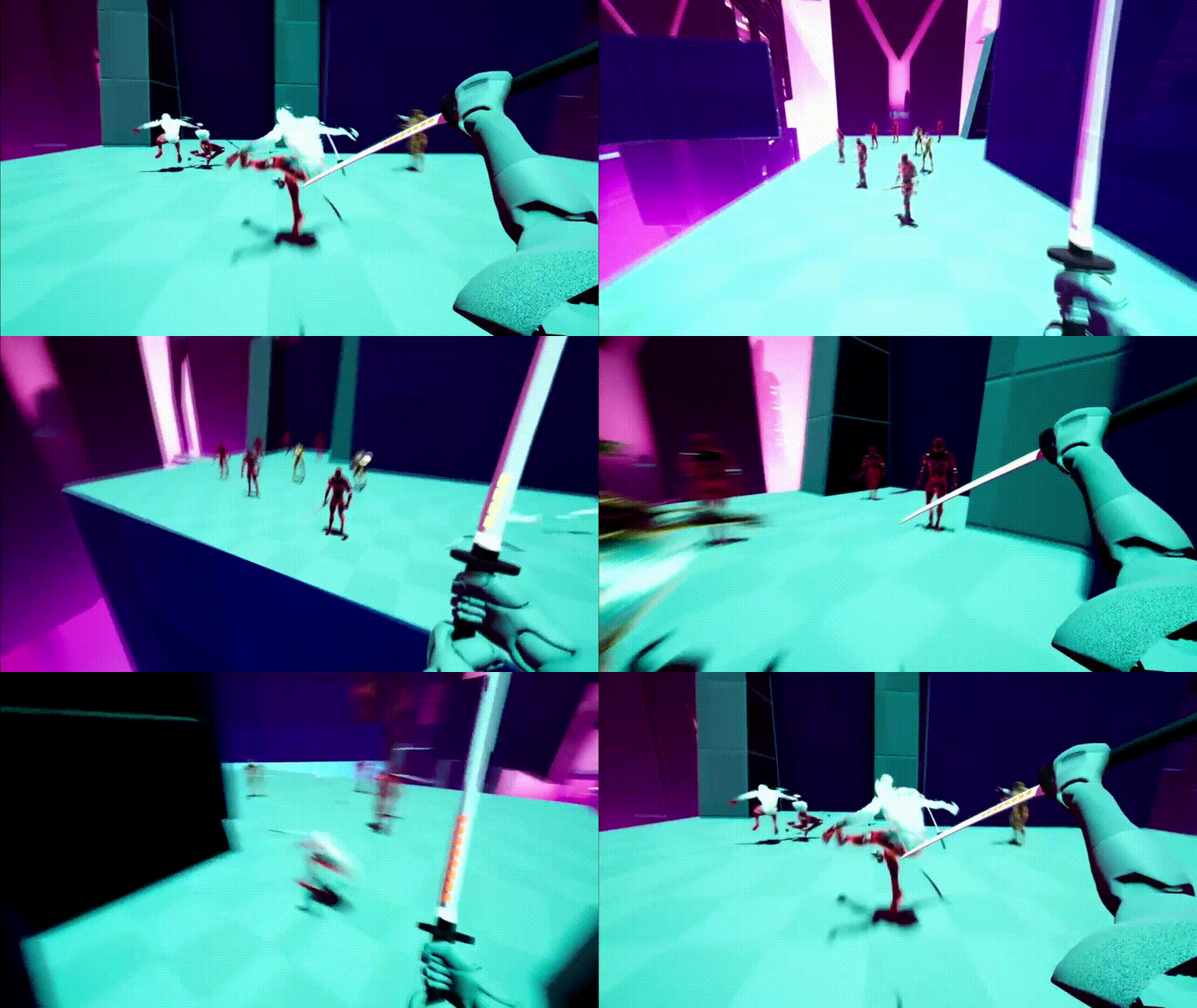
Consecutive Katana Dashes
Traverse
Movement is something that we've spent most of our brain power on, ensuring that it is smooth, intuitive and enjoyable.
We've tried wall climbing but through playtests it was removed as a clunky and unnecessary feature.
Dash as a Solution
Katana Dash is most powerful ability the player has - a dash that:
- Kills enemies on it's way
- Makes the player immune to damage
- Resets with enough kills
- (With high enough combo count) slows time after each kill
It serves both as a movement tool as well as a combat ability.
While initial playtests have shown just how overpowered it was, it was also a thing that provided the most fun, so we kept it and designed the level and the enemy density around it.
Movement is something that we've spent most of our brain power on, ensuring that it is smooth, intuitive and enjoyable.
We've tried wall climbing but through playtests it was removed as a clunky and unnecessary feature.
Dash as a Solution
Katana Dash is most powerful ability the player has - a dash that:
- Kills enemies on it's way
- Makes the player immune to damage
- Resets with enough kills
- (With high enough combo count) slows time after each kill
It serves both as a movement tool as well as a combat ability.
While initial playtests have shown just how overpowered it was, it was also a thing that provided the most fun, so we kept it and designed the level and the enemy density around it.
Game Mode
The Idea
We've had different ideas for the game mode but at that time I've recently played a board game called La Cosa Nostra, it has a fixed amount of rounds but the game was designed with it in mind and it felt great - each round was much more exciting than the previous one.
I was inspired and suggested something similar for the Game Mode:
"Each run should take X minutes. Each minute the game evolves to a new stage - more enemies with new properties, map changes, etc."
The Reality
Unfortunately, due to the overscope that in hindsight it clearly was, in the end the only thing left from this idea is a fixed time for a play session - 3 minutes.
The Idea
We've had different ideas for the game mode but at that time I've recently played a board game called La Cosa Nostra, it has a fixed amount of rounds but the game was designed with it in mind and it felt great - each round was much more exciting than the previous one.
I was inspired and suggested something similar for the Game Mode:
"Each run should take X minutes. Each minute the game evolves to a new stage - more enemies with new properties, map changes, etc."
The Reality
Unfortunately, due to the overscope that in hindsight it clearly was, in the end the only thing left from this idea is a fixed time for a play session - 3 minutes.
Enemy & AI Design
Gameplay Standpoint
After (we) designers have discussed enemies, we've decided on two types:
- Zombie type
Walks towards the player and attacks in melee.
- Gunner type
Tries to keep a certain distance from the player but otherwise stationary and shoots projectiles.
Having both melee and ranged enemies for us felt like a good motivation for the player to always be engaged and be meaningful about surroundings.
Technical Standpoint
A bit later one of our programmers have asked me about specifics of AI behaviour, so I've added this to GDD:
Gameplay Standpoint
After (we) designers have discussed enemies, we've decided on two types:
- Zombie type
Walks towards the player and attacks in melee.
- Gunner type
Tries to keep a certain distance from the player but otherwise stationary and shoots projectiles.
Having both melee and ranged enemies for us felt like a good motivation for the player to always be engaged and be meaningful about surroundings.
Technical Standpoint
A bit later one of our programmers have asked me about specifics of AI behaviour, so I've added this to GDD:

After programmers have implemented it, it allowed designers to tweak AI however we liked to balance it properly.
Combo System
Reasons to Exist
The game counts the amount of kills the player has made during X amount of time, that fades away after said time but refreshes after each kill.
Combo system serves three main purposes:
- Rewards the player
- Helps to evaluate own performance
- Sets tempo for gameplay flow
We've decided to enrich this experience with buffs that the player receives for achieving certain combo thresholds.
Rewards
The combo system has different stages after A/B/C.. amount of kills, that will grant the player following benefits:
- Increased movement speed with increased FOV for the right feel
- Increased slash radius
- Projectile deflect on Katana Slash
- Time slows down after each dash kill for X amount of seconds
SLAM!
Reasons to Exist
The game counts the amount of kills the player has made during X amount of time, that fades away after said time but refreshes after each kill.
Combo system serves three main purposes:
- Rewards the player
- Helps to evaluate own performance
- Sets tempo for gameplay flow
We've decided to enrich this experience with buffs that the player receives for achieving certain combo thresholds.
Rewards
The combo system has different stages after A/B/C.. amount of kills, that will grant the player following benefits:
- Increased movement speed with increased FOV for the right feel
- Increased slash radius
- Projectile deflect on Katana Slash
- Time slows down after each dash kill for X amount of seconds
SLAM!
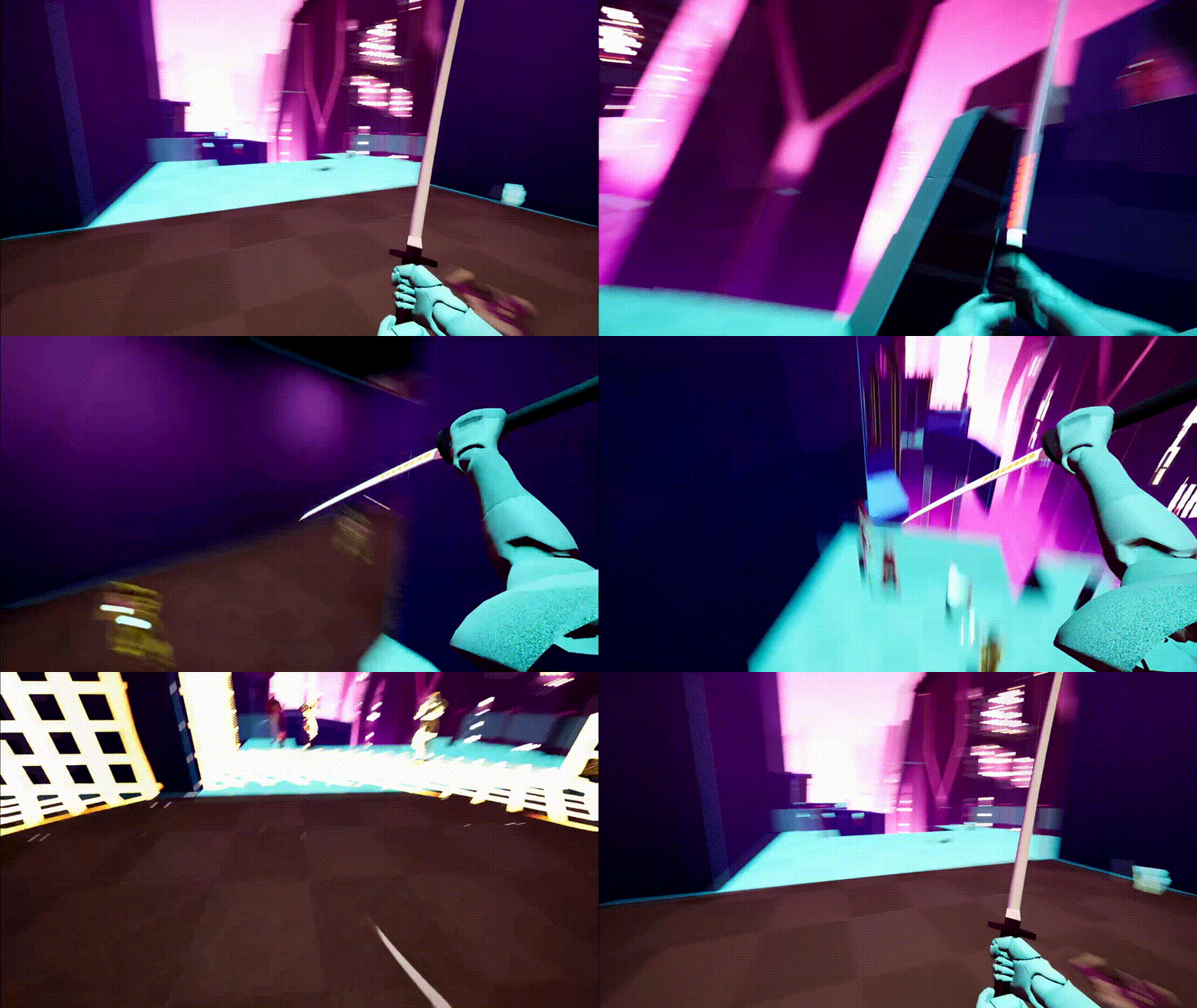
Katana Slam
Additionally, the player's katana has its own "mini combo system" - after 8 kills the bar on the katana would fill, allowing to perform a powerful AOE Katana Slam, after which the counter resets.
Katana Slam makes the player hop in the air and then kill every enemy within a huge radius around the player.
Score at the End
Score system is tied to a combo system: Each enemy gives 100/200 points that are multiplied by the current combo number and then added to a sum.
Katana Slam makes the player hop in the air and then kill every enemy within a huge radius around the player.
Score at the End
Score system is tied to a combo system: Each enemy gives 100/200 points that are multiplied by the current combo number and then added to a sum.
Overall, while we haven't been able to realize all of our ideas and ambitions, the end result is truly something we are proud of - the gameplay is smooth and captivating, there were a lot of times when we had to playtest something specific only to find ourselves playing the game for fun without even realizing it.
Artistic Side of Things
Concept Art
Meaning
We've collectively decided on Synthwave aesthetics since it is distinct, clear and COOL!
To start things off, I did the initial concept art so the team could unite under it.
It highlights:
- Colour coding of surface types and respected outlines
- General feel of Level Design
- Visual aesthetics
Take a look:
Concept Art
Meaning
We've collectively decided on Synthwave aesthetics since it is distinct, clear and COOL!
To start things off, I did the initial concept art so the team could unite under it.
It highlights:
- Colour coding of surface types and respected outlines
- General feel of Level Design
- Visual aesthetics
Take a look:

Colour Coding
You may see 5 main types of surfaces:
- Floor marked with grey blue
- Walls marked with blue
- Auxiliary structures with yellow
- Climbing boxes with orange
- Covers for enemies marked with pink
Level Design
Level Design displays use of rooftops as main platforms, signs and leftover constructions as auxiliary structures, fog as a way to telegraph fall death height.
Each platform has at least some degree of verticality, can be approached from different sides yet is not cluttered and does not obstruct gameplay flow.
You may see 5 main types of surfaces:
- Floor marked with grey blue
- Walls marked with blue
- Auxiliary structures with yellow
- Climbing boxes with orange
- Covers for enemies marked with pink
Level Design
Level Design displays use of rooftops as main platforms, signs and leftover constructions as auxiliary structures, fog as a way to telegraph fall death height.
Each platform has at least some degree of verticality, can be approached from different sides yet is not cluttered and does not obstruct gameplay flow.
The end result may not be exactly the same, but I am certain it was helpful for the development process.
Outline Shader
Why Even Bother?
While the team had their own struggles, I've started working on a neon outline shader - an almost necessity for Synthwave style.
The Issue
It seems easy to create but one issue kept us from moving on - at low angles surfaces with neon outlines start to fill themselves with the colour of the outline.
The solution was to ask a programmer for help and to use a different outline technique - while the previous one allowed to outline each edge of each object separately, the new one outlined less distinctly but without filling surfaces with colours.
Why Even Bother?
While the team had their own struggles, I've started working on a neon outline shader - an almost necessity for Synthwave style.
The Issue
It seems easy to create but one issue kept us from moving on - at low angles surfaces with neon outlines start to fill themselves with the colour of the outline.
The solution was to ask a programmer for help and to use a different outline technique - while the previous one allowed to outline each edge of each object separately, the new one outlined less distinctly but without filling surfaces with colours.

The issue with the new technique was that it doesn't outline edges of close surfaces that are facing the same direction, but since it's clearly a lesser evil we've gone with it.
A lack of Sound Design
Design
Soundscape
Since the scope of the project is small, there aren't a lot of sounds, but it was important to do them right:
- Footsteps needed to be precise to not disorient the player
- Enemies have charge sounds when they shoot to give the player an opportunity to react
- Music accompanies visuals
- Slash and hit sounds are juicy so the play always wants to keep going
High pace of the game required for Sound Design to be precise and clear.
Design
Soundscape
Since the scope of the project is small, there aren't a lot of sounds, but it was important to do them right:
- Footsteps needed to be precise to not disorient the player
- Enemies have charge sounds when they shoot to give the player an opportunity to react
- Music accompanies visuals
- Slash and hit sounds are juicy so the play always wants to keep going
High pace of the game required for Sound Design to be precise and clear.
Technical Side
Pipeline
My process of implementing sounds went like this:
- Find sounds on freesound.org
- Cut and tweak them in Audition
- Put them in FMOD Studio and, usually, add pitch and volume modulation
- Implement them in UE4
Example
Now, have look at the FMOD setup for this project:
Pipeline
My process of implementing sounds went like this:
- Find sounds on freesound.org
- Cut and tweak them in Audition
- Put them in FMOD Studio and, usually, add pitch and volume modulation
- Implement them in UE4
Example
Now, have look at the FMOD setup for this project:

Let's take the footsteps event as an example.
This event contains 7 different yet similar sounds that play at random every time it's called.
In addition to that, pitch and volume are random within certain values as well - all this to combat inevitable repetitiveness.
This event contains 7 different yet similar sounds that play at random every time it's called.
In addition to that, pitch and volume are random within certain values as well - all this to combat inevitable repetitiveness.
Due to the small scope of the project, the game doesn't have different footsteps sounds for different surfaces because there aren't a variety of surface types, but it is something that I've already done in a previous project.
The sounds I have are nothing to write home about so I will abstain from showcasing them...
Synthwave Music was taken from freesound.org as well due to lack of time, but it's definitely something I would like to do myself one day.
The sounds I have are nothing to write home about so I will abstain from showcasing them...
Synthwave Music was taken from freesound.org as well due to lack of time, but it's definitely something I would like to do myself one day.
Scrum and Me, and Us
Workflow
My Role
I've volunteered to be a Scrum Master for this project as well as organize meetings. Scrum Board has been held in Hack n' Plan.
Work Structure
After discussing matters with the team, the structure of our work day was as follows:
- Morning 15 minute meeting, everybody gets to say their plans for the day
- Work hours
- 1 hour lunch break at 12:00
- Another 15-20 minute meeting 2 hours before the end of the day.
Of course, we had many more small talks between each of us but this is a barebones "must" we had.
Each last meeting of the week has always been longer as we've closed many tasks and added new user stories.
Workflow
My Role
I've volunteered to be a Scrum Master for this project as well as organize meetings. Scrum Board has been held in Hack n' Plan.
Work Structure
After discussing matters with the team, the structure of our work day was as follows:
- Morning 15 minute meeting, everybody gets to say their plans for the day
- Work hours
- 1 hour lunch break at 12:00
- Another 15-20 minute meeting 2 hours before the end of the day.
Of course, we had many more small talks between each of us but this is a barebones "must" we had.
Each last meeting of the week has always been longer as we've closed many tasks and added new user stories.

Under each user story we had respected tasks, each assigned its own "size" - estimate on how much time and people it will take.
Each task had people responsible for them and some tasks had high or low priority.
Each task had people responsible for them and some tasks had high or low priority.
Though this Scrum Board has proved its worth, it seems to me that SCRUM is certainly much more useful for bigger projects with more people than for smaller ones.